
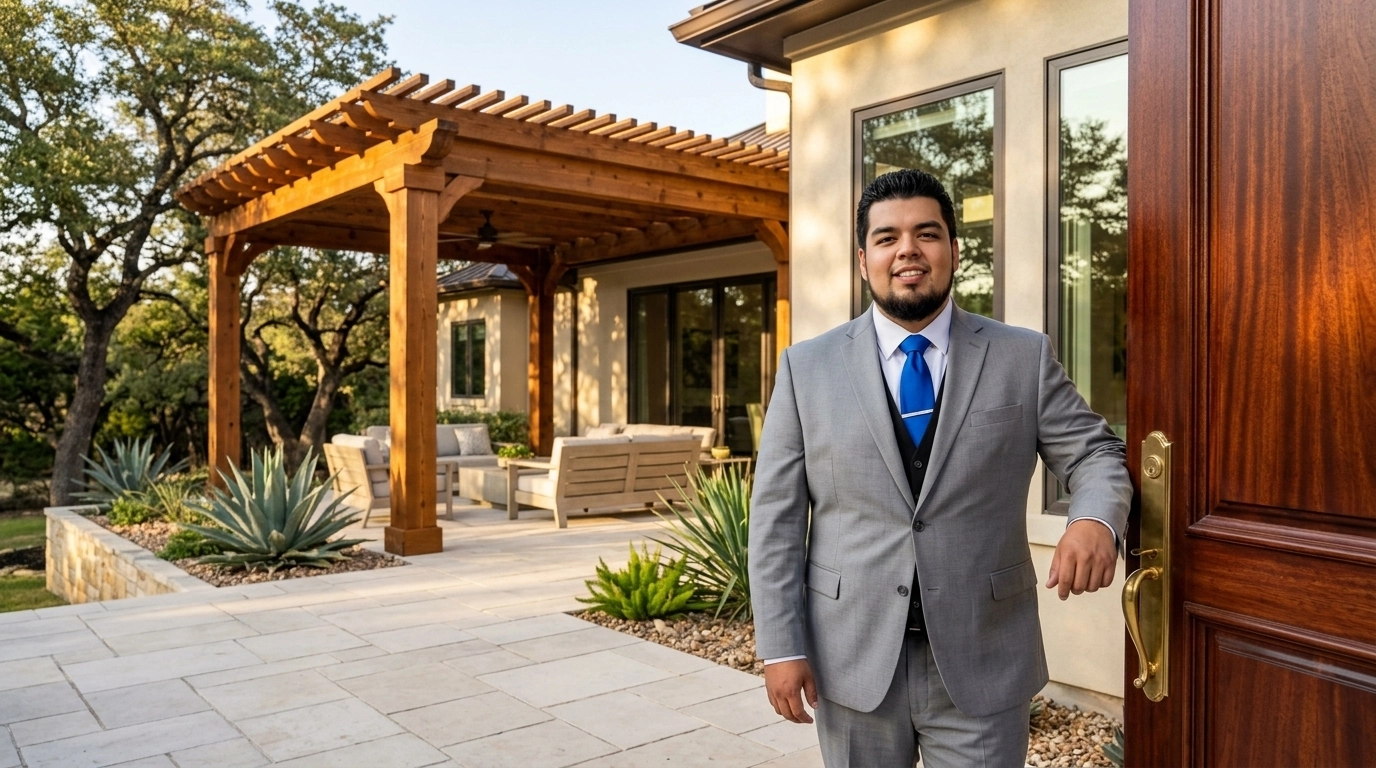
Transform your outdoor living areas before Austin’s winter moisture arrives. October and November offer one of the most reliable windows for deck and fence staining in Central Texas, with milder temperatures, lower humidity, and more predictable drying conditions.
For luxury homeowners, staining is not simply a color update. It is a preservation strategy for cedar decks, mahogany accents, custom fencing, pergolas, gates, and other architectural wood. The right preparation and coating help reduce UV damage, moisture intrusion, graying, checking, and premature replacement.
BLS Painting has provided expert craftsmanship and attentive local service since 1995. Our team evaluates your wood, selects the appropriate finish, and manages the project with the care expected for a high-end Austin estate.
Why Fall Is the Best Staining Window in Austin
Austin’s summer heat can push wood surface temperatures far above the actual air temperature. That creates application problems. Stain may flash-dry before it penetrates properly, leaving lap marks, uneven color, and reduced adhesion.
Fall provides more favorable conditions:
- Daytime temperatures are often within the preferred application range.
- Lower humidity supports more predictable drying.
- Wood has time to release moisture accumulated during summer storms and humidity swings.
- The sun is less intense than during the peak of summer.
- A properly scheduled project can cure before extended winter dampness arrives.
Most stain manufacturers recommend applying product when the wood surface is approximately 50–80°F, although exact requirements vary by product. The Cabot staining guidance also emphasizes the effects of temperature, humidity, sunlight, and rain on drying performance.
Professional crews monitor the wood surface, not just the weather app. A sunny 70°F day can make exposed decking substantially hotter. If the boards feel too hot to touch comfortably, the surface may be too warm to stain.
Does Your Deck or Fence Need Staining, or Only Cleaning?
Not every weathered surface needs a new coat. Applying stain over a sound, intact finish can create uneven color and interfere with adhesion. A professional evaluation should determine whether the wood needs cleaning, maintenance staining, or full preparation and refinishing.
Cleaning may be enough when:
- The existing finish remains uniform and intact.
- Water still absorbs gradually instead of immediately soaking into bare wood.
- There is surface dirt, pollen, or light mildew but little fading.
- The grain remains protected without widespread dry or gray fibers.
- There is no significant peeling, flaking, or blotchy discoloration.
Fresh staining is usually appropriate when:
- Wood appears noticeably gray, dry, or faded.
- Water absorbs rapidly into exposed boards.
- The finish has worn away in high-traffic areas.
- Horizontal deck boards show uneven color or bare sections.
- Fence sections receive strong western or southern sun.
- Previous stain is peeling, failing, or no longer providing consistent protection.
A sprinkle test can provide an initial indication, but it is not a substitute for a complete inspection. BLS Painting also checks for damaged boards, open joints, failed fasteners, splintering, and areas where landscaping or irrigation may be keeping the wood damp.
Moisture Testing Comes Before Application
Moisture is one of the most important variables in exterior wood staining. If the boards are too wet, the stain may not penetrate or cure correctly. Trapped moisture can contribute to blistering, peeling, mildew, and premature finish failure.
After cleaning or rain, wood commonly needs at least two or three dry days. Shaded sections, areas beneath covered patios, and dense fence lines may require more time.
Before staining, our team evaluates:
- Wood moisture levels with a moisture meter.
- Shaded and exposed sections separately.
- Overnight temperatures and dew risk.
- Rain forecasts for at least 24 hours after application.
- The specific product’s application and cure requirements.
A reading near or below 15% is often used as a practical target for exterior wood, but the correct threshold depends on the wood species, product, and manufacturer instructions. If the wood is not ready, the project should wait. A rushed application is not a professional result.

Choosing the Right Stain for Cedar, Mahogany, and Architectural Wood
The best stain depends on the wood species, desired appearance, exposure, and maintenance expectations. BLS Painting helps you balance natural character with the level of UV and moisture protection your property requires.
Transparent stain
Transparent stain provides the greatest visibility of the wood grain and natural variation. It works well when preserving the original appearance is the priority.
Its trade-off is lower pigment. Less pigment generally means less UV protection and a shorter maintenance cycle, particularly on south- and west-facing surfaces in Austin.
Semi-transparent stain
Semi-transparent stain is often the most versatile option for cedar decks and fences. It adds color while preserving visible grain and texture.
The additional pigment helps improve UV resistance and creates a more consistent appearance across boards with slight color variation. It is a strong choice for homeowners who want the wood to look natural but still need meaningful protection from Austin’s sun.
Solid-color stain
Solid-color stain provides a more uniform, paint-like appearance. It can help unify mixed repairs, cover significant discoloration, and create a stronger color statement on fencing or large structures.
Because solid stain forms a more substantial surface film, preparation and moisture control are critical. Applied over unstable coatings or damp wood, it can peel. The PPG/Flood guidance on surface temperature explains why correct surface conditions influence penetration, adhesion, cure, and long-term durability.
For dense hardwoods such as mahogany, product selection and preparation require additional care. Dense grain may limit penetration, so cleaning, sanding, and a controlled application technique become especially important.
What the BLS Painting Process Looks Like Day to Day
Every estate is different, but a typical deck or fence staining project follows a clear sequence.
Day 1: Inspection and protection
We confirm the scope, identify wood species and existing coatings, and review the weather window. Before preparation begins, the crew protects landscaping, pool areas, stonework, outdoor furniture, lighting, windows, and adjacent painted surfaces.
You receive clear information about access, daily progress, and areas that will be temporarily unavailable.
Day 1 or 2: Cleaning and surface preparation
The team removes dirt, pollen, mildew, loose fibers, and failing finish. Cleaning pressure and solution strength are adjusted to the wood and surrounding materials. Delicate stone, plantings, and architectural details receive careful protection.
After cleaning, the wood must dry fully. We do not stain simply because the calendar says the project should be finished.
Day 2 or 3: Sanding, repairs, and moisture verification
Once the surface is dry, we address rough fibers, raised grain, peeling areas, and minor defects. Light sanding can improve uniformity and adhesion without unnecessarily removing healthy material.
Moisture readings are taken again. If shaded areas remain too damp, those sections are given additional drying time.
Day 3 or 4: Stain application
The crew applies the selected stain in manageable sections and maintains a wet edge to reduce lap marks. Application may involve brushing, rolling, or controlled spraying followed by back-brushing, depending on the wood profile and surrounding property.
Direct, intense sun is avoided whenever possible. The team follows shade around the property and monitors surface temperature during the work.
Final day: Cure protection and walkthrough
Most projects require at least 24 hours without rain after application. A longer 24–48-hour protection period may be advisable depending on the product, humidity, and overnight conditions.
Deck furniture should remain off the surface until the stain is dry and firm according to the product instructions. Light foot traffic may resume sooner than normal furniture placement, but BLS Painting provides property-specific guidance at the final walkthrough.

Protecting Pools, Stone, Landscaping, and Finished Exteriors
Luxury properties require more than careful stain application. They require careful site management.
BLS Painting plans for:
- Pool water and coping protection.
- Limestone, travertine, brick, and masonry protection.
- Covered planting beds and delicate landscaping.
- Outdoor kitchens, furniture, lighting, and irrigation equipment.
- Overspray, dust, and cleanup control.
- Safe access routes for residents, guests, and pets.
Our goal is to leave the wood revitalized without creating avoidable disruption elsewhere on your property.
Coordinate Deck Staining With Exterior Painting and Stucco Repainting
Fall can also be an efficient time to coordinate several exterior maintenance projects. Deck and fence staining may be scheduled alongside exterior painting when access, masking, and protection can be planned together.
This is especially useful when your home needs:
- Exterior trim or siding repainting.
- Stucco repairs and repainting.
- Power washing of compatible surfaces.
- Refinishing for stained doors, pergolas, gates, or garage doors.
- Color coordination between wood finishes, stucco, masonry, and painted trim.
BLS Painting’s wood preservation article explains why Austin’s UV exposure and humidity changes make proactive maintenance valuable. For stucco, our guide to stucco repainting in Austin covers the importance of repairs, cleaning, appropriate coatings, and proper application conditions.
A coordinated plan reduces repeated setup, protects finished work, and gives your property a more unified appearance.
Why Choose BLS Painting for Austin Estate Wood?
Since 1995, BLS Painting has served Austin homeowners with a family-owned approach and the standards expected of a professional luxury painting company.
- Skilled Craftsmanship: Our crews use meticulous preparation and controlled application techniques for high-value architectural wood.
- Technical Evaluation: We assess moisture, adhesion, wood condition, exposure, and existing finishes before recommending a product.
- Property Protection: We protect pools, landscaping, stone, furnishings, and finished surfaces throughout the project.
- Clear Communication: You receive a defined scope, realistic scheduling, daily updates, and a final walkthrough.
- Comprehensive Service: We can coordinate deck and fence staining with exterior painting, power washing, and stucco repainting.
- Local Expertise: We understand the sun, humidity, rain patterns, and material demands of Austin and surrounding communities.
Erick Luna, Vice President and Senior Project Manager, helps oversee the communication and quality standards that guide each project. His role is to ensure your property receives a tailored plan rather than a one-size-fits-all treatment.
Frequently Asked Questions
Is October or November better for staining in Austin?
Both can work well. October often provides a particularly reliable combination of moderate temperatures, lower humidity, and predictable drying, while November can also be effective when overnight temperatures remain within the product’s requirements.
How long will my deck be unavailable?
Many projects require the deck to remain free of furniture and heavy traffic for at least 24 hours after application. Exact downtime depends on the stain, temperature, humidity, shade, and manufacturer instructions.
Can you stain if rain is expected later in the week?
Possibly, but the crew needs a sufficient dry window before and after application. BLS Painting schedules work around the forecast and will delay staining if the wood or cure conditions are not suitable.
Can gray cedar be restored?
Often, yes. Cleaning, brightening, sanding, and a properly selected stain can improve weathered cedar. Severely degraded fibers or damaged boards may require additional restoration or replacement.
Can staining be completed with exterior painting or stucco work?
Yes. Coordinating these services can reduce disruption and improve color continuity across your home’s wood, stucco, masonry, and painted elements.
Protect Your Estate Wood Before Winter
Do not wait for peeling, deep graying, or moisture damage to become visible. Schedule a fall evaluation while Austin’s October and November conditions still support a controlled staining process.
Contact BLS Painting for an estimate tailored to your deck, fence, pergola, gate, or other architectural wood. Our team will help you determine whether your property needs cleaning, maintenance staining, or complete refinishing.
BLS Painting is Austin's Painting Contractor for Luxury Residences:
We proudly service the elite neighborhoods of Old Enfield, Tarrytown, Barton Creek, Pemberton Heights, and Spanish Oaks. Our expert crews also provide luxury estate services in Westlake, Rollingwood, Lakeway, Bee Caves, Driftwood, Dripping Springs, Spicewood, and Buda, as well as other premier residential areas surrounding Austin, Texas.
Leave a Reply