
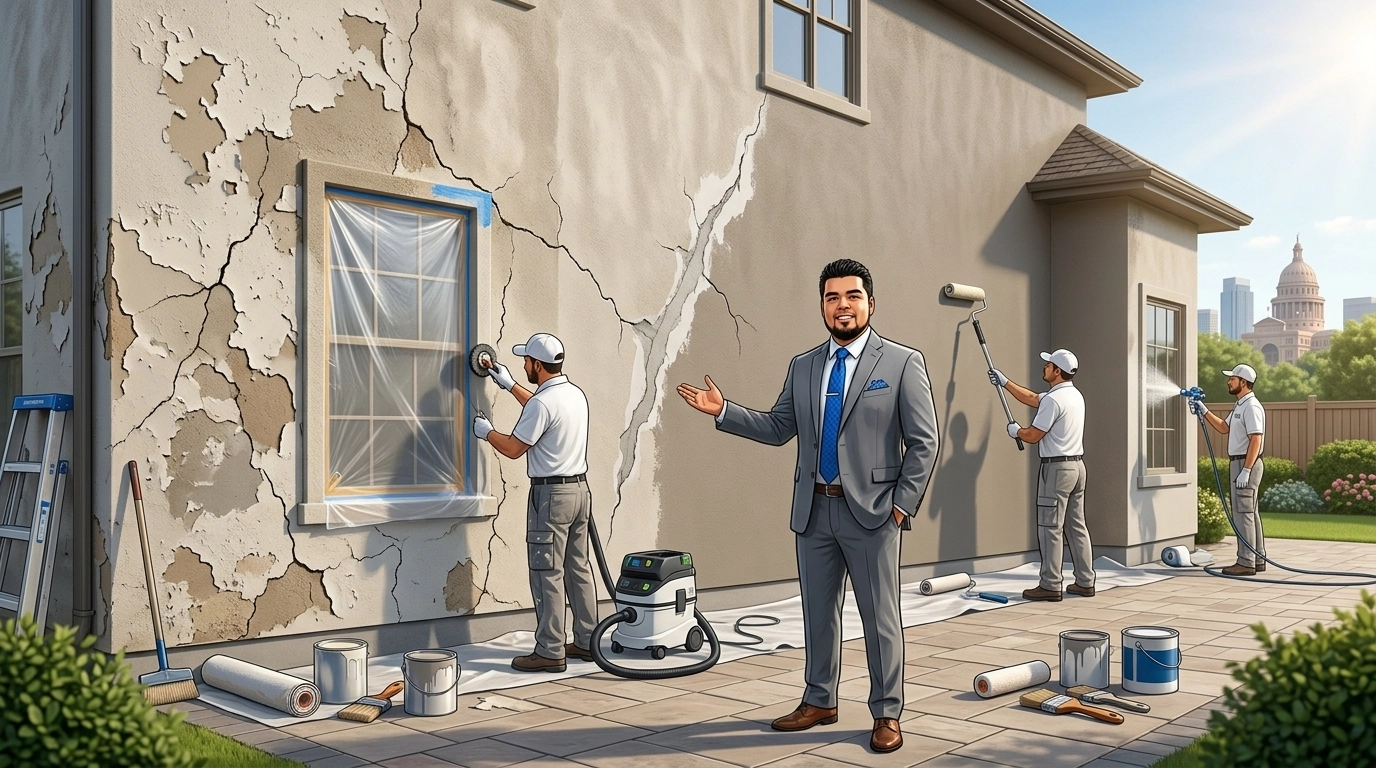
Owning a stucco home in Austin is a mark of timeless Mediterranean or Contemporary style. Whether you are tucked away in the rolling hills of West Lake or enjoying the vibrant streets of Tarrytown, your home’s exterior is its first line of defense and its greatest aesthetic asset. However, stucco repainting in Austin is not a weekend DIY project or a task for an inexperienced crew.
Stucco is a porous, "breathing" material. In the Central Texas climate: where we swing from blistering 100-degree summers to sudden humidity spikes: your exterior finishes undergo immense stress. When done correctly, a fresh coat of paint can revitalize your property and boost its market value. When done poorly, it becomes a costly nightmare of peeling, bubbling, and structural damage.
At BLS Painting, we have been the go-to professional painters in Austin, TX since 1995. We’ve seen every mistake in the book. If you are planning to refresh your home, avoid these seven common pitfalls to ensure your investment lasts for decades, not just seasons.
1. Skipping Vital Stucco Repairs Before the Brush Hits the Wall
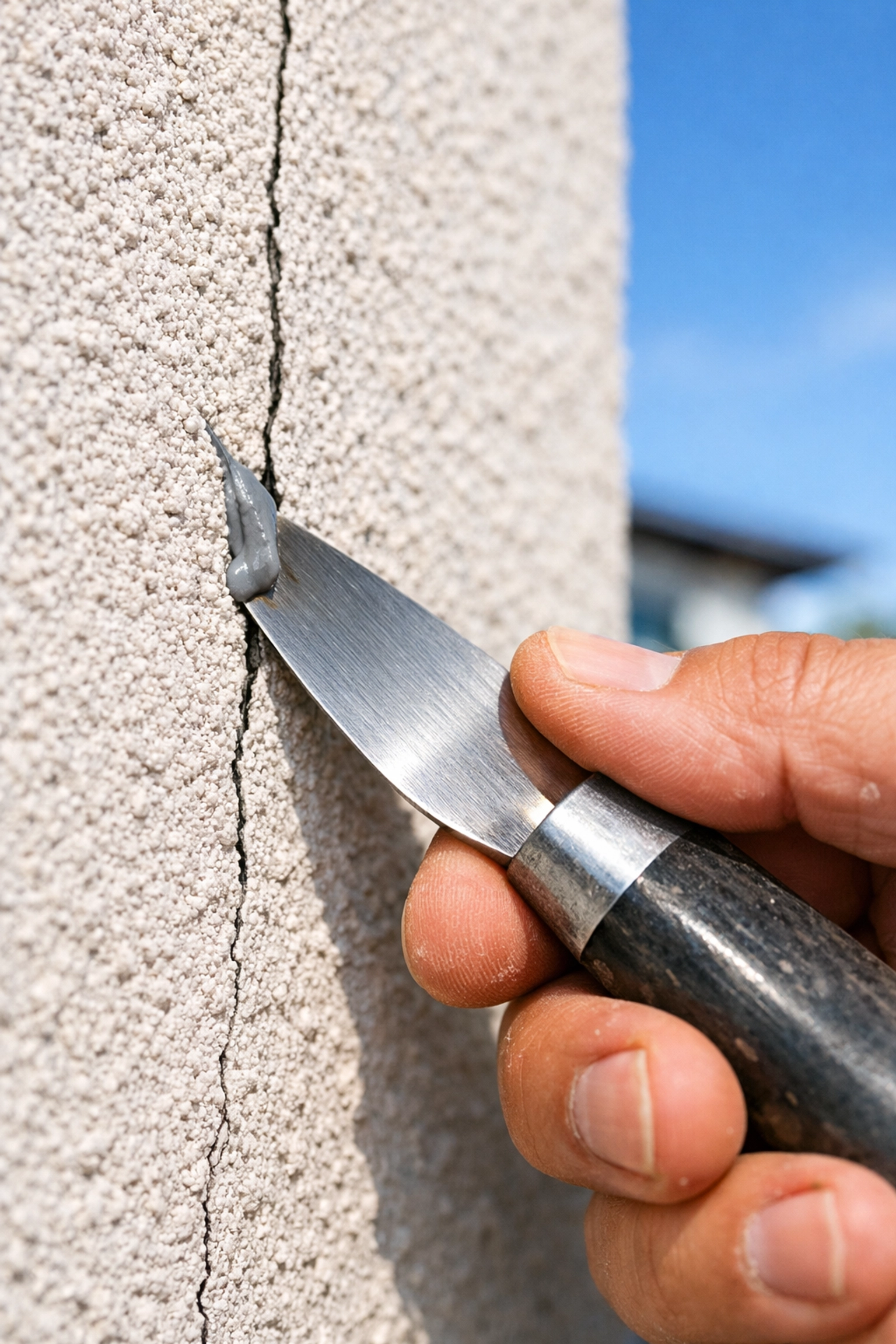
The biggest mistake homeowners make is treating paint like a "magic eraser" for cracks and holes. It isn’t. Stucco naturally develops hairline cracks over time due to settling and thermal expansion. If you paint over these without addressing the underlying issue, you are essentially sealing moisture into your walls.
The Problem: Water seeps through unrepaired cracks and gets trapped behind the new paint film. This leads to efflorescence (that white, powdery salt buildup), mold, and eventually, large chunks of stucco falling off your home.
The Fix: You must perform a meticulous inspection. Fill all hairline cracks with a high-quality masonry caulk or patching compound designed to flex. For larger structural issues, professional restoration painting techniques are required. Remember, if you apply new stucco patches, they must cure for 15 to 30 days. If you paint too early, the high alkalinity of the fresh stucco will "burn" through the paint, causing immediate discoloration.
2. Inadequate Surface Preparation and Cleaning
Austin is dusty, and our cedar fever seasons leave behind more than just allergies: they leave a fine layer of organic film on your home. Painting over a dirty surface is the fastest way to ensure your paint peels within twelve months.
The Problem: Dirt, mildew, and "chalking" (the breakdown of old paint into a powdery residue) prevent the new coating from bonding to the substrate.
The Fix: A professional power washing and stucco repainting service is non-negotiable. You need to strip away the grime and organic growth without damaging the delicate texture of the stucco. We recommend a "soft wash" approach: using the right chemical balance to kill mold spores followed by a low-pressure rinse. This ensures a clean, "toothy" surface that the new paint can grab onto.
3. Braving the Intense Austin Heat at the Wrong Time
In Austin, the weather is your biggest collaborator or your worst enemy. Many painters try to power through a project in the middle of a July afternoon. This is a recipe for failure.
The Problem: When the surface temperature of your stucco exceeds 90-100 degrees, the water in the paint evaporates too quickly. This is called "flashing." The paint dries before it has a chance to chemically bond and level out, leaving you with a brittle, streaky finish that will crack as soon as the temperature drops.
The Fix: Monitor the "Austin Window." Professional residential painting in Austin, TX requires strategic scheduling. We start early in the morning and follow the shade around the house. If the wall is hot to the touch, it is too hot to paint. Always check the forecast for humidity levels as well; high humidity can extend dry times and affect the sheen of your finish.
4. Using the Wrong Type of Paint for Texas Conditions
Not all exterior paints are created equal, and stucco requires a very specific set of characteristics. Many homeowners opt for a standard "high-quality" acrylic, but for luxury Austin homes, that might not be enough.
The Problem: Standard paints lack the elasticity needed for stucco. As the Texas sun beats down, your house actually expands and contracts. If the paint is too rigid, it will develop micro-fissures.
The Fix: Invest in high-build acrylic or elastomeric coatings. Elastomeric paint is specifically engineered for stucco; it is about 10 times thicker than regular paint and can stretch and bridge small cracks. This creates a waterproof barrier while still allowing the home to "breathe." At BLS Painting, we help you select the right product that offers maximum UV resistance to prevent the vibrant colors of your Austin estate from fading into a dull pastel within two years.

5. Skipping the Primer Application
It is tempting to look at "Paint + Primer" in one cans and think you’re saving time. For stucco, this is rarely the case, especially if the surface is weathered or has been patched.
The Problem: Stucco is highly absorbent. Without a dedicated primer, the stucco will "suck" the moisture out of the paint unevenly. This results in a blotchy, dull appearance known as "suction spotting."
The Fix: Use a high-quality masonry primer. A dedicated primer seals the porous surface, neutralizes the pH levels of the stucco, and provides a uniform base. This ensures that your topcoat looks rich and consistent across the entire facade. If you are changing colors significantly: common in Austin’s modern new construction painting trends: a tinted primer is essential for achieving the true depth of the color.
6. Using Improper Tools and Application Techniques
Stucco is a highly textured surface. Using a standard thin-nap roller or trying to do the whole job with a brush will leave you with "holidays" (missed spots) and an uneven finish.
The Problem: Thin application leaves the peaks of the stucco texture vulnerable to the elements, while the valleys don't get enough coverage. This leads to premature erosion of the paint film.
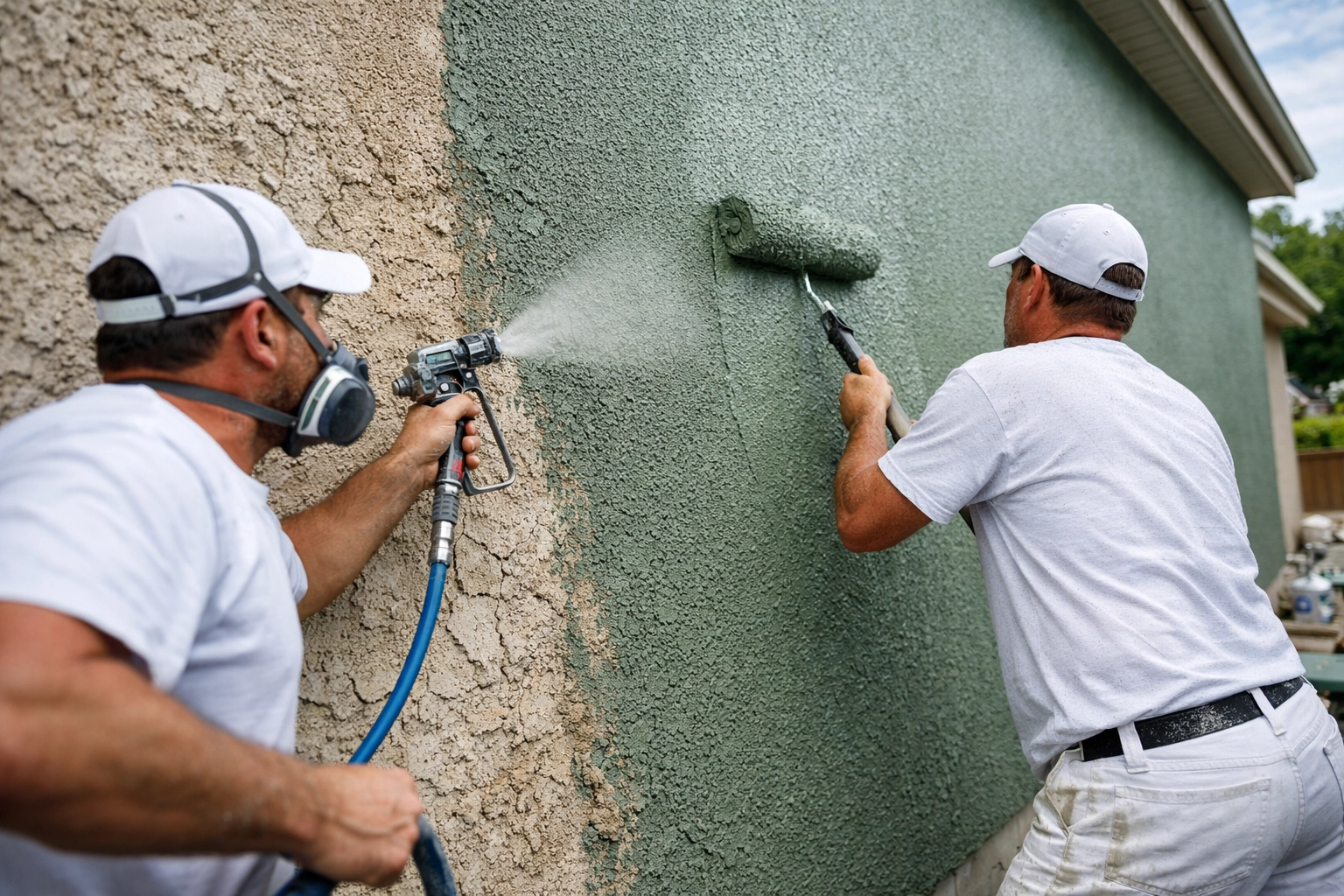
The Fix: We utilize a "spray and back-roll" technique. First, we use an airless sprayer to apply a generous, even layer of paint. Immediately following the sprayer, a second professional uses a heavy-nap roller (typically 1” to 1.5”) to push the paint into every nook and cranny of the texture. This ensures 100% coverage and a much thicker, more durable protective layer. It’s the difference between a "color change" and a "protective coating."
7. Rushing the Color Selection and Testing Process
Austin’s natural light is unique. The golden hour in the Hill Country can turn a "neutral grey" into a "dusty purple" in an instant.
The Problem: Choosing a color from a small swatch in a showroom often leads to "buyer's remorse" once the entire 3,000-square-foot exterior is finished.
The Fix: Test large samples. We recommend painting 3×3 foot sections on different sides of the house to see how the Texas sun hits the pigment at 10:00 AM versus 6:00 PM. Take your time. Stucco repainting is an investment you’ll live with for a decade. If you’re looking for inspiration, check out our testimonials to see how we’ve helped other Austin homeowners find the perfect palette for their architecture.
Why Choose BLS Painting for Your Austin Stucco Project?
Repainting your home should be an exciting transformation, not a stressful ordeal. At BLS Painting, we bring over 30 years of local expertise to every project.
- Skilled Craftsmanship: Our team is trained through the BLS Painting Academy (BPA), ensuring they master the specific techniques required for high-end stucco.
- Meticulous Preparation: We don't cut corners on cleaning or repairs; we treat your home as if it were our own.
- Local Experience: We understand the Austin climate and recommend products that actually stand up to the heat.
- Transparent Communication: From the initial estimate to the final walk-through, you are kept in the loop.

Frequently Asked Questions
How often should I repaint my stucco home in Austin?
Typically, a high-quality stucco paint job in Austin lasts 7 to 10 years. However, if you notice fading, chalking, or hairline cracks, it’s best to address it sooner to prevent structural damage.
Can I power wash my stucco myself?
It is risky. Too much pressure can gouge the stucco or force water behind the substrate. We recommend a professional power washing to ensure the surface is cleaned safely and effectively.
Is elastomeric paint always better?
Not necessarily. While great for bridging cracks, it requires expert application. If applied too thin, it loses its benefits; if applied over moisture, it can bubble. We evaluate your home’s specific needs before recommending a product.
How long does a typical exterior repainting take?
For a standard luxury home in Austin, the process usually takes 5 to 10 business days, depending on the amount of repair work and prep needed.
Ready to Revitalize Your Home?
Don't leave your home’s protection to chance. Whether you need a complete color overhaul or meticulous restoration staining for your wooden accents, BLS Painting is here to help.
Get an Estimate Today and let’s make your Austin home the envy of the neighborhood.