
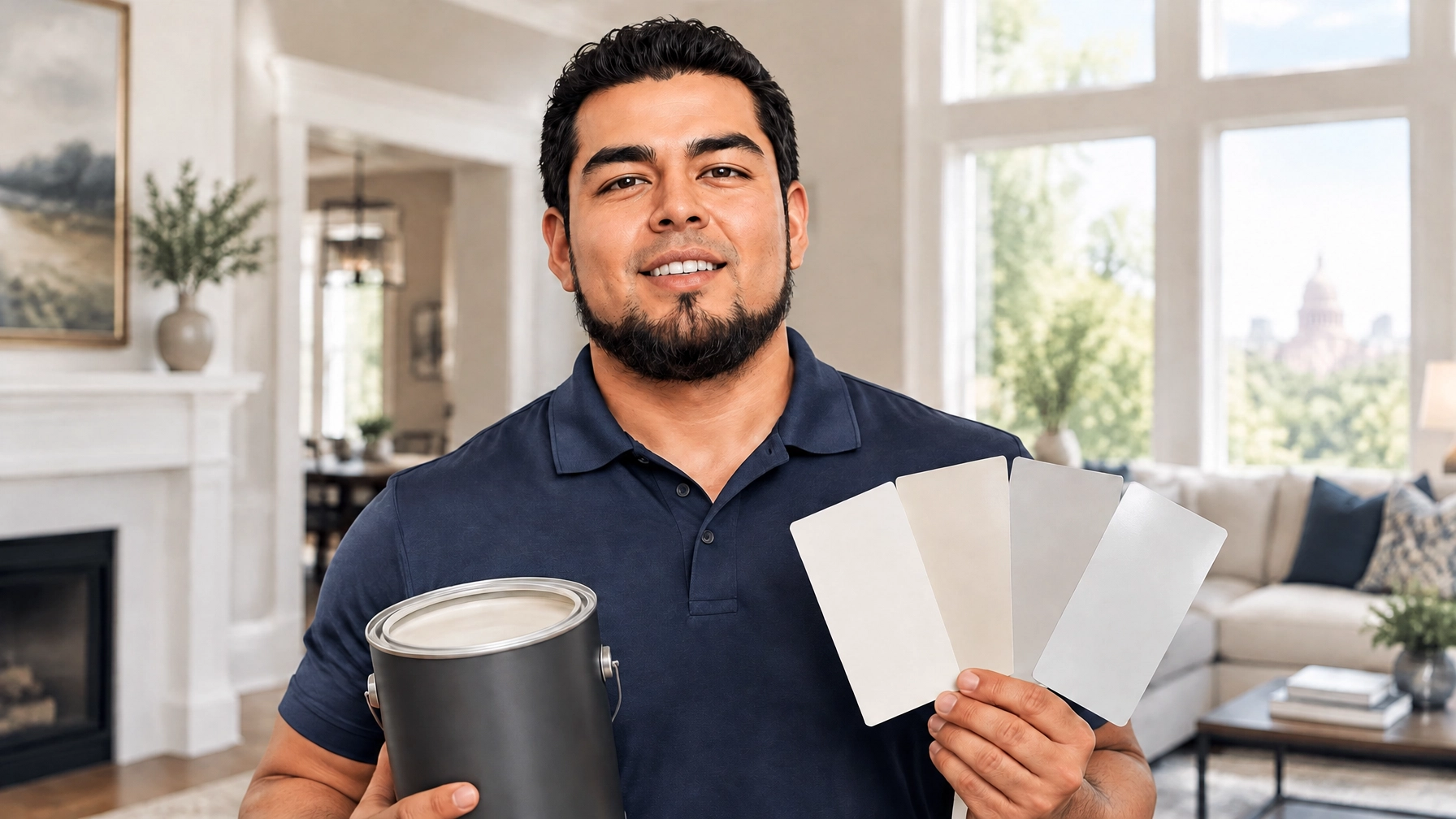
Transform your Austin home with paint finishes chosen for the way you live, the character of your architecture, and the light each room receives. The right coating does more than add color: it can soften wall imperfections, define detailed millwork, and make frequently used surfaces easier to maintain.
For a high-end interior, the best finish is not always the shiniest or most washable. It is the one that balances appearance, durability, and the condition of the surface. This guide explains how to choose sheen, paint type, and primer for your home, and when a professional’s eye can help you avoid costly guesswork.
Get an Estimate for your interior project.
Start With Sheen: How Much Light Should the Surface Reflect?
Sheen describes how much light a painted surface reflects. Lower-sheen finishes create a quiet, soft appearance and tend to hide small surface irregularities. Higher-sheen finishes are generally easier to clean, but their reflections can make bumps, patch marks, and uneven preparation more noticeable. Sheen names can vary by manufacturer, so check the product specifications as well as the label.
Flat Enamel and Matte: Soft Looks, Different Performance
Flat Enamel is designed to offer a nonreflective look with greater durability than a traditional dead flat wall paint. Depending on the specific product, it can be a practical choice for powder rooms, kitchens, or other areas that need regular cleaning. Flat Enamel provides a good surface to be cleaned but does not allow a durable finish for scrubbing.
Matte has a small amount of shine. It helps reduce the appearance of minor wall flaws and gives living rooms, bedrooms, dining rooms, and ceilings a calm, refined finish. This sheen provides a washable surface and allows for minimal scrubbing.

Eggshell and Satin: More Cleanability and Definition
Eggshell/Satin reflects more light and generally withstands routine cleaning better. It is useful for high-traffic areas, children’s rooms, kitchens, and hallways. On trim, windows, and doors, it can bring definition to architectural details without the stronger shine of semi-gloss.
The trade-off is visibility: satin may reveal surface defects more readily than matte or eggshell. Thorough preparation is essential, particularly on large walls exposed to raking daylight or bright interior lighting.
Semi-Gloss and High Gloss: Reserve Shine for the Right Details
Semi-gloss offers a noticeable but controlled shine and is a practical option for doors, trim, and many cabinet finishes. It is easy to clean, but it can emphasize dents, brush marks, or uneven patches. Cabinet painting requires careful cleaning, sanding, and an appropriate bonding primer to support adhesion and a smooth finish.
High gloss creates a dramatic, reflective effect. It can highlight beautifully prepared millwork, cabinetry, or a statement door, especially in a formal or contemporary design. Because it reflects so much light, it is rarely the best choice for walls with flaws. Use it selectively and only after meticulous surface preparation.

A Practical Room-by-Room Starting Point
Use these recommendations as a starting point, not a substitute for checking the chosen product’s specifications:
- Ceilings: Flat or matte to reduce glare and soften the appearance of minor surface variation.
- Living rooms and bedrooms: Matte for a velvety look in lower-wear spaces, or eggshell for added cleanability.
- Hallways and family rooms: Eggshell or satin, selected according to traffic, lighting, and the desired sheen.
- Kitchens and bathrooms: A washable eggshell or satin product rated for the room’s moisture and cleaning demands.
- Doors, trim, and cabinets: Satin or semi-gloss enamel, matched to the design and the surface’s exposure to handling.
- Statement millwork: High gloss can create impact when the substrate is exceptionally smooth and well prepared.
For a deeper look at how sheen affects a room, consult Benjamin Moore’s guide to choosing an interior paint finish. For a particular home, review a large sample in both daylight and evening light. BLS Painting also explains the value of testing the actual product and sheen in Choosing Your Sample: Real Paint vs. Color Sample.
Oil-Based or Water-Based: Choose the Right Paint Chemistry
Water-based paints, including latex and acrylic formulations, are common for interior walls and ceilings. They typically dry faster than traditional oil-based paints, have lower odor, and clean up with water. Many premium waterborne enamels are also designed for trim and cabinetry.
Oil-based paint can form a durable finish and may be appropriate for certain existing surfaces or restoration work. It generally takes longer to dry, has stronger odor, and requires solvent-based cleanup. The decision should account for the existing coating, substrate, ventilation, and product compatibility, not just the idea that oil is always more durable.
If you are moving from an older glossy or oil-based coating to a water-based product, preparation matters. The surface may need cleaning, deglossing, and a compatible adhesion primer to help the new finish bond. A professional evaluation can help identify the right system before work begins.
Low-VOC Paint and Indoor Comfort
Volatile organic compounds (VOCs) can be released into indoor air as some paints and finishes dry. Low- and zero-VOC options can help reduce emissions, and choosing them does not automatically mean giving up durability or quality. However, a “zero-VOC” label does not necessarily mean no odor or no emissions. Check the specifications for the exact product and tinted color, ventilate the work area, and follow the manufacturer’s instructions.
The EPA’s indoor-air-quality remodeling guidance recommends ventilation during work and after applying materials that may release pollutants. With clear planning and appropriate work-area protection, you can make the project more comfortable for your household.
Primer: When It Helps, and When It May Not Be Needed
Primer supports adhesion and creates a more uniform base for the finish coat. It can seal porous surfaces, help block stains, and improve coverage when the existing color or substrate would otherwise show through.
Primer is commonly needed on new drywall, raw wood, and other unpainted or porous surfaces. It may also be appropriate over repairs, stains, glossy coatings, or when switching paint systems. By contrast, a sound, clean, previously painted surface may not need full priming if the new coating is compatible. Repaired or patched areas may still need spot priming to reduce flashing. The visible difference in sheen or texture after painting.
“Paint and primer in one” does not eliminate the need to clean, repair, sand, or select a suitable primer when the surface requires one.
Why Choose BLS Painting?
For residential painting in Austin, TX, careful product selection is only one part of a successful project. Surface condition, preparation, application, and communication all contribute to the final result.
- Skilled Craftsmanship: Experienced painters apply each finish with attention to edges, trim, and architectural details.
- Meticulous Preparation: Proper repairs, cleaning, sanding, and priming help support smooth coverage and lasting adhesion.
- Tailored Recommendations: You receive finish guidance based on your home’s surfaces, lighting, and daily use.
- Clear Communication: Project planning and updates help you understand the process, timing, and next steps.
- Local, Family-Owned Service: BLS Painting has served Austin-area homeowners since 1995 with comprehensive painting services.
Erick Luna, Vice President and Senior Project Manager, helps guide projects from planning through completion. His focus on product selection, preparation, and communication supports a consistent process for your home.

Get Expert Guidance for Your Austin Home
The best finish depends on the surface, the room, and the look you want to achieve. If you are planning luxury home painting in Austin, BLS Painting can help you weigh finish, paint type, and primer before work begins.
Get an Estimate to discuss your project, or Contact Us with questions.
Frequently Asked Questions
Which paint finish is best for most interior walls?
Eggshell is a versatile starting point because it offers a soft appearance with more cleanability than traditional flat paint. Matte may be preferable in lower-traffic rooms where you want minimal reflection and a smooth, sophisticated look.
Is satin or semi-gloss better for trim?
Both can work. Satin offers a more restrained sheen, while semi-gloss provides more shine and easy cleaning. The right choice depends on your design, the condition of the trim, and how much handling it receives.
Do low-VOC paints perform as well as standard paints?
Many low- and zero-VOC paints are made for durable residential use. Review the specifications for the exact product and color, since performance and emissions can vary by formulation.
Do previously painted walls always need primer?
No. A clean, sound, compatible painted surface may not need full priming. New drywall, raw wood, stains, patches, glossy surfaces, and some paint-system changes often call for primer or targeted spot priming.
How do you keep an interior painting project clean?
Professional planning includes protecting floors and furnishings, preparing surfaces carefully, and keeping work areas orderly. The project team can explain the work sequence, access needs, and ventilation plan before painting begins.
BLS Painting is Austin's Painting Contractor for Luxury Residences:
We proudly service the elite neighborhoods of Old Enfield, Tarrytown, Barton Creek, Pemberton Heights, and Spanish Oaks. Our expert crews also provide luxury estate services in Westlake, Rollingwood, Lakeway, Bee Caves, Driftwood, Dripping Springs, Spicewood, and Buda, as well as other premier residential areas surrounding Austin, Texas.
Leave a Reply