

Austin’s fall weather creates an important maintenance window for high-end homes. After months of intense ultraviolet exposure, heat, humidity, and sudden storms, your exterior paint may be showing early signs of failure, even if the property still looks attractive from the street.
A fall inspection helps you identify small issues before they spread into widespread peeling, wood rot, stucco damage, or moisture intrusion. For owners of custom homes in Westlake, Barton Creek, Tarrytown, Spanish Oaks, and surrounding communities, preventive maintenance protects both the architectural integrity and long-term value of the estate.
BLS Painting has been servicing Austin-area homes since 1995. Our approach is simple: identify the cause of the failure, correct the substrate, and apply the right coating system for the surface and climate.
Why October and November Are Ideal for Exterior Paint Maintenance in Austin
Central Texas weather is demanding on exterior finishes. Summer heat can push surface temperatures far above the air temperature, while intense sunlight accelerates fading and binder breakdown. Fall brings more workable conditions.
Late October through mid-November often provides the best exterior painting window, with:
- Daytime temperatures commonly in the 65–80°F range
- Less extreme UV exposure than summer
- Moderate humidity during dry weather stretches
- Cooler surfaces that support better paint application and curing
- Enough time to address damage before winter moisture and cold fronts
The calendar alone does not determine whether a project can proceed. Professional painters in Austin, TX should also check surface temperature, dew point, humidity, and the rain forecast. Surfaces must be clean and dry, and fresh coatings need adequate time to form a durable film before evening dew or rain.
Contact BLS Painting to schedule a professional exterior inspection during this seasonal maintenance window.
7 Warning Signs Your Austin Estate’s Exterior Paint Is Failing
1. Chalking and Fading Are Visible on Large Wall Areas
Chalking occurs when ultraviolet exposure breaks down the paint binder, leaving a fine, powdery residue on the surface. You may notice it when you run your hand across a wall and see white or color-tinted dust.
Fading often accompanies chalking, especially on south- and west-facing elevations. The color may look uneven, washed out, or noticeably different from areas protected by roof overhangs.
These symptoms indicate more than a cosmetic issue. Once the binder deteriorates, the paint loses adhesion and weather resistance. New coating applied over chalking may fail prematurely unless the surface is properly cleaned, tested, and primed.
A professional assessment may include:
- Cleaning or soft washing the exterior
- Testing for residual chalk
- Scraping loose material
- Spot-priming exposed areas
- Selecting a UV-resistant exterior coating
2. Hairline Cracks and Failed Caulk Joints Are Spreading
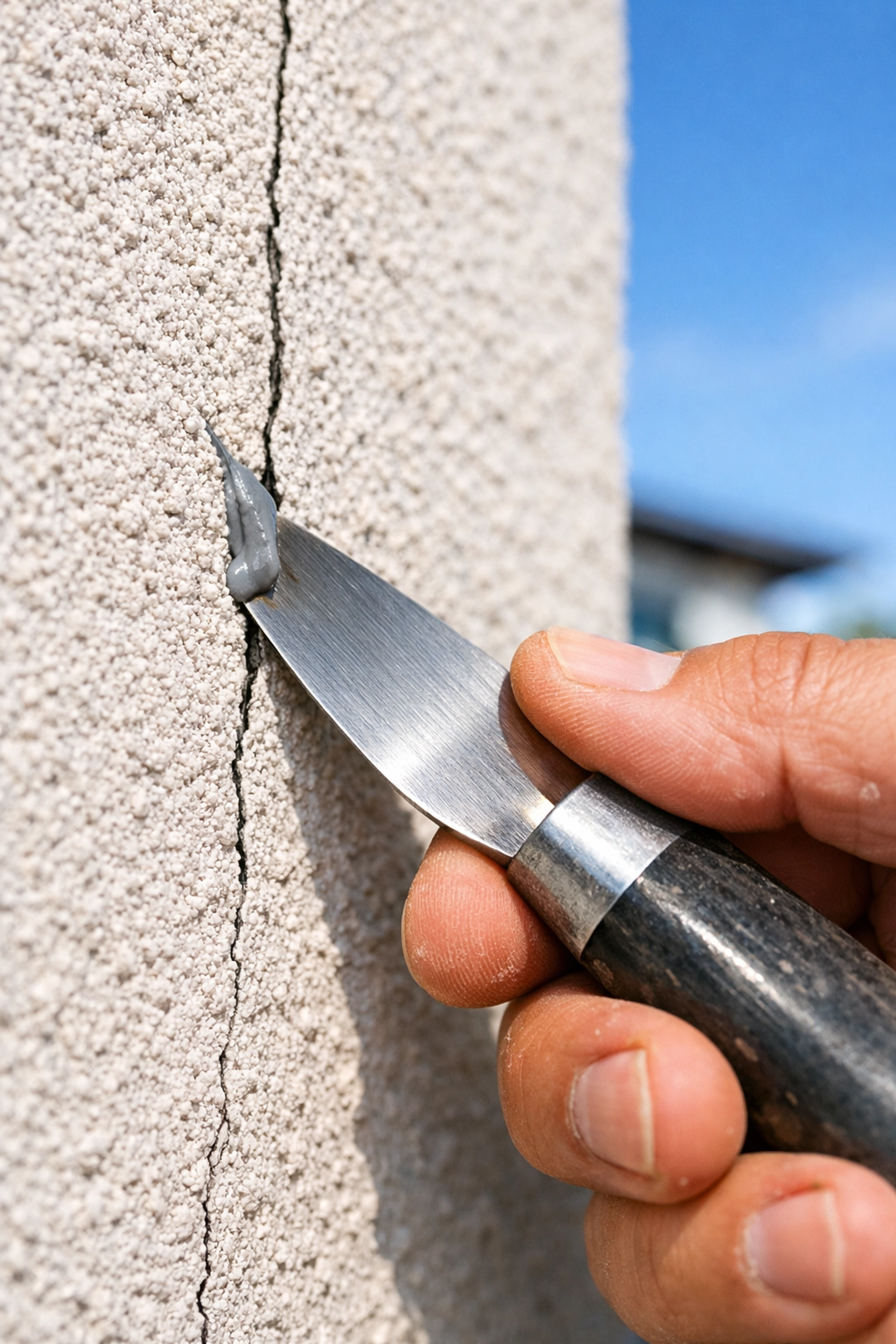
Hairline cracking is common on stucco, masonry coatings, wood trim, and areas where different materials meet. Thermal expansion and contraction can gradually separate caulk joints around windows, doors, fascia, and architectural transitions.
Inspect the following areas closely:
- Stucco control joints
- Window and door perimeters
- Fascia-to-siding transitions
- Trim around arches and columns
- Seams between wood and masonry
- Areas where previous caulk has split or pulled away
Small cracks can allow water to enter behind the coating system. On stucco, the correct repair may involve flexible masonry caulk or a compatible patching compound. On wood trim, failed caulk should be removed and replaced with an exterior-grade product that can accommodate movement.
Do not simply paint over cracked joints. Proper adhesion depends on repairing the joint first and allowing compatible materials to cure.
3. Blistering or Bubbling Signals Moisture Intrusion
Blistering appears as raised bubbles, soft areas, or small domes beneath the paint film. It can occur on wood, stucco, masonry, and previously painted surfaces.
Common causes include:
- Moisture trapped behind the coating
- Painting over damp substrates
- Interior humidity pushing through exterior walls
- Poor surface preparation
- Excessive heat during application
- Failed flashing, gutters, or caulk joints
Blisters should not be cut open and immediately covered with new paint. The source of the moisture must be identified first. Otherwise, the new coating may bubble again or trap water against the substrate.
On stucco estates, moisture can migrate through hairline cracks or porous areas. On wood millwork, persistent dampness may lead to swelling, fungal growth, or rot. A professional exterior inspection can determine whether the repair requires coating removal, carpentry, masonry repair, or improved drainage.
4. Paint Is Peeling at Window Sills and Fascia
Peeling around window sills, fascia boards, eaves, and other horizontal surfaces deserves immediate attention. These areas receive concentrated exposure to rainwater, runoff, condensation, and reflected sunlight.
Peeling can indicate:
- Poor adhesion from an earlier coating
- Unsealed end grain on wood
- Water sitting on horizontal surfaces
- Failed caulk or flashing
- Rot beneath the paint
- Incompatible coating layers
Use a close visual inspection around every window and roofline. If the paint is lifting but the wood remains sound, the repair may involve scraping, sanding, spot-priming, and repainting. If the wood feels soft or shows darkened edges, carpentry may be necessary before refinishing.
Addressing these areas in the fall helps protect custom wood trim and millwork before winter rain reaches exposed fibers.
5. Mildew Is Growing on North-Facing Walls
North-facing walls, shaded courtyards, covered porches, and areas behind dense landscaping retain moisture longer than sun-exposed elevations. In Austin, that creates favorable conditions for mildew and organic growth.
Mildew may appear as:
- Black, green, or gray spotting
- Discoloration beneath windows
- Dark streaks below roof edges
- Growth around shaded stucco texture
- Algae-like staining near landscaping or irrigation
Mildew is not solved by painting over it. The surface requires appropriate cleaning and treatment before a new coating is applied. High-pressure washing can damage stucco texture, force water behind trim, or disturb vulnerable joints. A controlled soft-wash process is often safer for luxury exteriors.
After cleaning, the surface must dry fully. The correct primer and finish should also be selected for the substrate and exposure conditions.
6. Exterior Trim Looks Chalky, Brittle, or Dull
Chalky trim is one of the easiest warning signs to overlook because the main wall color may still look acceptable. Examine shutters, window casings, fascia, columns, garage doors, pergolas, and other wood details from several angles.
Trim may show:
- A powdery residue
- Loss of sheen
- Brittle or cracking paint
- Exposed wood at corners
- Faded color on decorative details
- Peeling around fasteners and joints
Custom wood trim is especially important on Austin estates because it frames the architecture. Once the coating breaks down, moisture can enter through exposed edges and end grain. The resulting damage can compromise millwork that is expensive and difficult to replicate.
A meticulous trim maintenance project may include detailed sanding, caulk replacement, spot priming, and a durable exterior finish. For stain-grade wood, a separate restoration staining process may be more appropriate than opaque paint.

7. South- and West-Facing Elevations Look More Worn
Sun-baked elevations often fail before shaded sides of the home. South- and west-facing walls receive extended afternoon exposure, which can create dramatic differences in color, sheen, and surface condition around the same property.
Compare these areas with protected elevations:
- Stucco walls beneath deep overhangs
- Garage doors and exposed entry doors
- Wood shutters and trim
- Fascia and decorative brackets
- Painted brick or masonry
- Exterior doors and gates
If one side of the estate looks significantly lighter, rougher, or more brittle, the coating system may be approaching the end of its service life. This does not always mean the entire home requires immediate repainting. A professional can determine whether targeted repairs, elevation-specific maintenance, or a full exterior repaint provides the best long-term result.
Stucco Repainting Requires the Right Coating System
Stucco is porous and responds to Austin’s temperature swings. A suitable repainting system may include masonry primer, high-build acrylic, or elastomeric coating depending on the substrate, existing finish, crack pattern, and moisture conditions.
Elastomeric coatings can provide valuable flexibility and crack-bridging performance for small, non-structural cracks. However, they are not a universal solution. The surface must be clean, dry, properly repaired, and compatible with the selected product.
Application thickness also matters. A coating applied too thinly may not deliver the expected crack-bridging or weather resistance. A coating applied over trapped moisture may blister or peel.
For more information, review our guide to stucco repainting mistakes in Austin.
Why Choose BLS Painting for Luxury Exterior Maintenance?
BLS Painting provides comprehensive exterior care for custom homes and estates throughout the Austin area.
- Skilled Craftsmanship: Our crews use meticulous preparation and application techniques suited to stucco, wood trim, masonry, and architectural millwork.
- Climate-Specific Recommendations: We account for Austin’s UV exposure, temperature swings, humidity, and seasonal weather when recommending coatings.
- Complete Surface Preparation: We address chalking, mildew, failed caulk, peeling paint, and substrate concerns before applying new finish coats.
- Comprehensive Service: We provide exterior painting, stucco repainting, power washing, wood refinishing, deck and fence staining, and related repairs.
- Clear Communication: You receive a defined scope, realistic scheduling expectations, and updates throughout the project.
- Local Experience: BLS Painting has served Austin-area homes since 1995 as a local, family-owned company.
See our exterior painting services or home maintenance resources to learn more about protecting your property.
Frequently Asked Questions
Is October or November better for exterior painting in Austin?
Both months can provide excellent opportunities. Late October through mid-November often offers mild temperatures, but the project should be scheduled around rain, dew, humidity, and incoming cold fronts.
How do I know whether my home needs touch-ups or a full repaint?
Small, isolated defects may respond well to targeted maintenance. Widespread chalking, fading, peeling, or adhesion failure usually indicates that a full repaint or larger coating system is more appropriate.
Can elastomeric paint repair stucco cracks?
Elastomeric coatings can bridge some small, non-structural cracks when correctly applied. They cannot replace structural repairs or solve moisture problems behind the stucco.
How long does an exterior repaint take?
A luxury exterior project commonly takes five to ten business days, depending on the size of the estate, repairs, number of surfaces, weather, and required preparation.
Will the project leave my landscaping and property messy?
Professional crews should protect landscaping, hardscape, windows, doors, and nearby finishes throughout the project. BLS Painting prioritizes organized preparation, daily cleanup, and a final walkthrough.
How often should I inspect my exterior paint?
A visual inspection each spring and fall is a practical schedule for Austin estates. Professional maintenance becomes especially valuable after summer heat and before extended winter moisture.
Protect Your Estate Before Small Defects Become Major Repairs
Exterior paint is part of your home’s protective envelope. When you catch chalking, failed caulk, blistering, mildew, or peeling early, the repair is typically more manageable than a full restoration involving damaged wood, compromised stucco, or widespread moisture intrusion.
If you notice any of these warning signs, schedule an inspection with experienced exterior house painters in Austin. BLS Painting can help you determine whether your estate needs maintenance, stucco repainting, wood trim refinishing, or a complete exterior transformation.
Get an Estimate from BLS Painting before the fall painting window closes.
BLS Painting is Austin's Painting Contractor for Luxury Residences:
We proudly service the elite neighborhoods of Old Enfield, Tarrytown, Barton Creek, Pemberton Heights, and Spanish Oaks. Our expert crews also provide luxury estate services in Westlake, Rollingwood, Lakeway, Bee Caves, Driftwood, Dripping Springs, Spicewood, and Buda, as well as other premier residential areas surrounding Austin, Texas.
Leave a Reply