
A fresh coat of paint can transform a room, but it cannot hide a wall that has not been properly repaired. Under natural light, even a small nail pop, hairline crack, or uneven patch can interrupt the smooth finish you expect in a custom home.
For discerning homeowners, drywall patching is not simply a quick application of spackle. It is the careful work of diagnosing damage, rebuilding the surface, matching its texture, and preparing it to accept paint evenly. Done well, the repair disappears into the finished wall.
If you are planning a seasonal refresh or preparing to welcome holiday guests, fall is a practical time to address interior repairs and repainting. With expert preparation, your home can look renewed without visible reminders of the work.
Ready to prepare your walls for a refined finish? Get an estimate from BLS Painting.
Why drywall preparation matters before interior painting
Paint highlights the surface beneath it. Light moving across a wall can reveal ridges, shallow depressions, rough edges, and texture differences that were easy to overlook before repainting. Higher-sheen finishes and strong natural or recessed lighting can make these flaws even more noticeable.
A durable, consistent finish starts with sound preparation. That means repairing damage before applying primer and paint, not trying to cover defects with extra coats. The Drywall Finishing Council’s troubleshooting guide describes how drywall finishing issues can result from factors such as weak bonding, application conditions, or impact. The right repair depends on the cause and extent of the problem.
Four drywall defects that require more than a quick spackle job
Hairline cracks: Identify the cause before filling
Fine cracks can appear where walls meet ceilings, around doors and windows, or along drywall seams. Some are minor surface defects; others return because of movement, impact, or an underlying moisture issue.
A lasting repair begins by removing loose material and creating a clean, stable surface. Depending on the crack, the repair may require joint compound in several thin applications or reinforcing tape and a broader treatment. Simply painting over the line, or filling it without addressing the cause, can leave the crack visible again.
If a crack is widening, repeatedly returns, or appears alongside water staining or other signs of movement, have the underlying issue evaluated before repainting.
Nail pops: Secure the drywall before smoothing it
A nail pop is the small raised bump or circular crack that appears when a drywall fastener pushes through the surface. Filling the bump alone does not address movement behind it.
A proper repair secures the drywall to the framing as needed, removes or resets the protruding fastener, and fills the resulting indentation. After the compound dries, the area is sanded smooth, checked for a level transition, and primed before finish paint.
Corner-bead damage: Restore a crisp, straight edge
Corners take everyday wear from furniture, cleaning, and foot traffic. A dented or loose corner bead can leave a visible ridge or crack that becomes more obvious after painting.
The damaged section needs to be stabilized or replaced where appropriate. Compound is then applied and feathered across both sides of the corner so the transition looks straight and even. Rushing this stage can leave a bulky patch that catches light along the length of the wall.
Texture mismatch: Blend the repair into the surrounding wall
A smooth patch on a textured wall stands out, even when the paint color is an exact match. Orange-peel, knockdown, and custom textures each reflect light differently, so the repair must blend with the surrounding surface in both pattern and depth.
Careful texture matching takes judgment and practice. A small test area can help confirm the application method before the repair is completed. Once dry, the surface is inspected and adjusted as needed before primer and paint are applied.
How professional patching makes repairs disappear
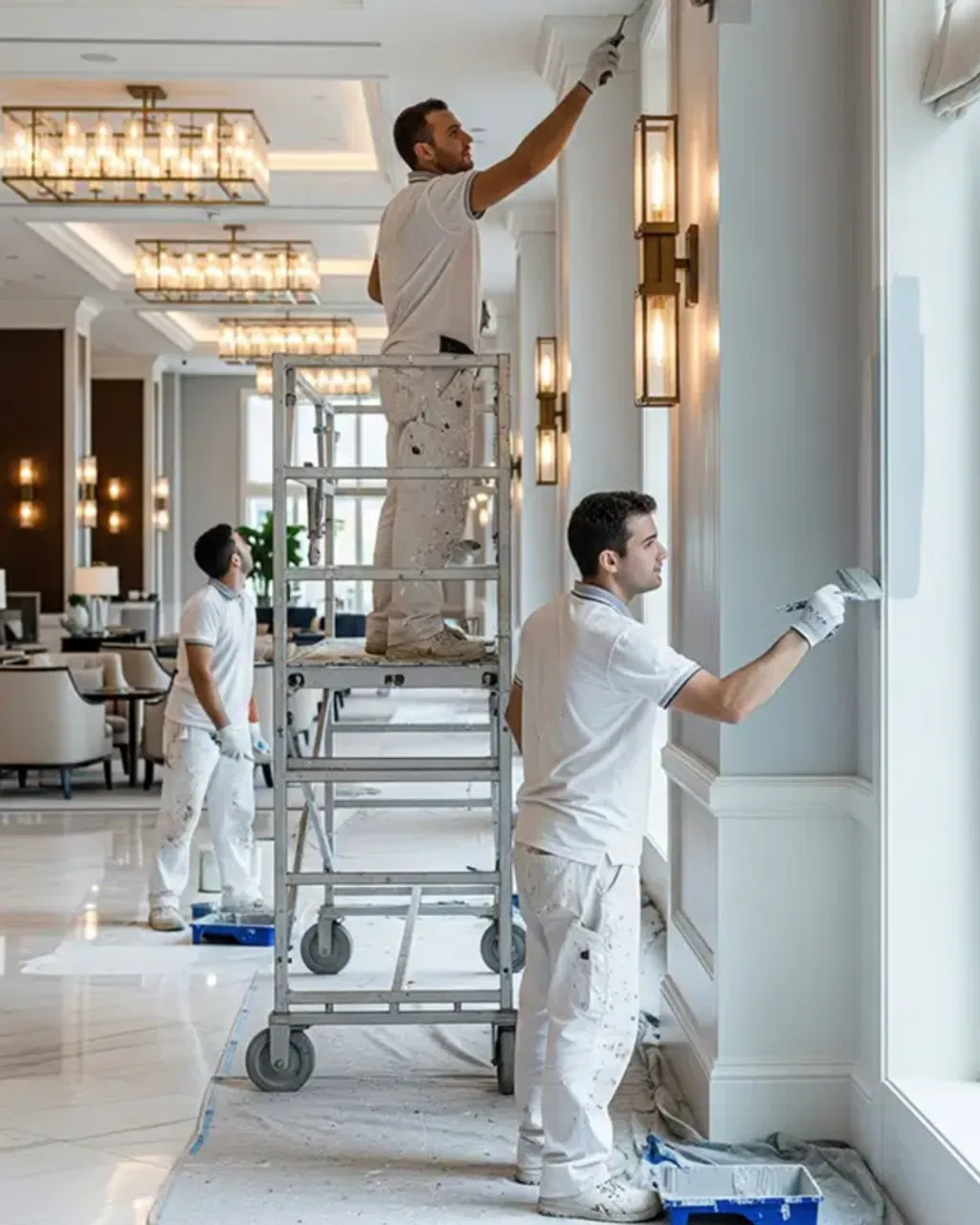
A finished repair is the result of several coordinated steps, not just filler and sanding.
- Inspect the damage. Identify whether the wall is loose, the material is cracked, the corner bead is compromised, or moisture may be involved.
- Protect the home. Cover floors and nearby furnishings, and contain dust as the work requires.
- Repair in stages. Apply the appropriate material in controlled layers, allowing sufficient drying time between coats.
- Sand and remove dust. Feather the edges and smooth the surface so the patch blends into the existing wall.
- Match the texture. Recreate the surrounding finish and check it under the room’s lighting.
- Prime before painting. Fresh compound and exposed drywall absorb paint differently from the surrounding surface. Primer helps limit flashing: uneven dull or shiny areas in the finished coat.
- Repaint for consistency. Depending on the patch size, wall color, and finish, repainting the complete wall plane can produce a more uniform appearance than spot-painting.
Product directions matter: drying and recoat times vary by material and conditions. For additional background on preparing drywall repairs for paint, see Lowe’s drywall repair guide.

Why fall is a smart time to plan interior repairs in Austin
Fall offers a useful window to refresh your home before holiday gatherings and a busy winter calendar. You can address small defects while planning an interior repaint, rather than trying to fit repairs into the days just before guests arrive.
Indoor projects are not tied to outdoor painting conditions, but temperature, humidity, ventilation, and product instructions still matter. A professional crew can explain the expected sequence, allow time for repairs and coatings to dry, and coordinate the work around your household. Low-VOC paint options may also be discussed if indoor air quality is a priority.
For a more comfortable project, ask how floors and furnishings will be protected, how dust will be managed, and which areas need to remain accessible. Clear expectations help you plan with confidence.
Why choose BLS Painting for drywall patching and repainting?
BLS Painting has served Austin homeowners as a local, family-owned company since 1995. Our team brings drywall patching and interior painting together so surface repairs are planned as part of the finished result.
- Skilled Craftsmanship: Your walls receive careful attention to detail, from the first assessment through the final finish.
- Integrated Preparation: Repairs, texture blending, priming, and repainting are coordinated to help patches disappear.
- Clear Communication: You receive straightforward information about the work, timing, access, and preparation.
- Flexible Service, Whether you need a few repairs or a broader interior refresh, the scope can be tailored to your home.
Explore our homeowner painting services or learn about BLS Painting. When you are ready, contact us for an estimate.

Frequently asked questions
Can drywall patches be completed as part of an interior repaint?
Yes. Coordinating patching with repainting allows repairs, texture matching, priming, and finish coats to be planned together. The amount of repainting needed depends on the repair and the desired color and sheen consistency.
How long does drywall patching take?
Timing depends on the number and size of repairs, the material used, drying conditions, and whether texture must be matched. Some projects require multiple visits or drying intervals; your project scope should account for those steps.
Will the repair be visible after painting?
The goal is for it to blend into the surrounding wall. Proper surface preparation, texture matching, primer, and repainting all help; larger repairs may benefit from repainting the full wall plane.
Can you repair cracks that keep coming back?
A recurring crack should be assessed before it is patched again. If movement, moisture, or another underlying issue is contributing, that cause may need attention before cosmetic repair and painting.
How do you keep the home clean during the work?
Ask about protection for floors and furnishings, dust control, and daily cleanup as part of planning. The approach can be tailored to the rooms and surfaces involved.
BLS Painting is Austin's Painting Contractor for Luxury Residences:
We proudly service the elite neighborhoods of Old Enfield, Tarrytown, Barton Creek, Pemberton Heights, and Spanish Oaks. Our expert crews also provide luxury estate services in Westlake, Rollingwood, Lakeway, Bee Caves, Driftwood, Dripping Springs, Spicewood, and Buda, as well as other premier residential areas surrounding Austin, Texas.
Leave a Reply